

After months of deportation orders that would send asylum seekers to “third countries,” where they aren’t from, it appears this practice is on pause in San Francisco immigration court. None of these deportation orders, called motions to pretermit, have been filed since Friday, local immigration attorneys told Mission Local.
This pause comes on the heels of a March 12 federal directive to Immigration and Customs Enforcement lawyers to stop filing motions to pretermit, The Seattle Times reported.
That news article cited an email sent to ICE attorneys. There was no rationale given in that directive to explain the reason for this change or indicate whether it would be temporary or permanent. It did state that lawyers don’t need to withdraw pretermit motions that have already been filed.
U.S. Immigration and Customs Enforcement and the Department of Homeland Security on Friday sent Mission Local a statement reading, “We are working to get illegal aliens out of our country as quickly as possible while ensuring they receive all available legal process, including a hearing before an immigration judge. Under President Trump and Secretary Noem, we are partnering with our great allies across the globe to accept asylum seekers.”
The statement namedropped former DHS chief Kristi Noem despite her high-publicity March 5 firing. The department did not respond to Mission Local’s specific questions on the cessation of pretermit motions.
Over the last four months, the Department of Homeland Security had ramped up the use of pretermit motions, forming “Asylum Cooperative Agreements” with countries like Honduras, Guatemala, Ecuador and Uganda to receive asylum seekers from elsewhere and process their asylum claims.
This tactic had been widely used in San Francisco’s immigration court. Homeland Security filed 1,141 motions to pretermit in San Francisco between November and the end of February, according to data from the Executive Office for Immigration Review collected by the nonprofit Mobile Pathways. Local immigration attorneys say they have not yet confirmed any cases in San Francisco of immigrants being deported as a result of these motions.
Milli Atkinson, director of the Immigrant Legal Defense Program at the San Francisco Bar Association, said that attorneys were seeing motions to pretermit almost every day in court over the last four months. But on Friday, and again on Monday and Tuesday, there were none.
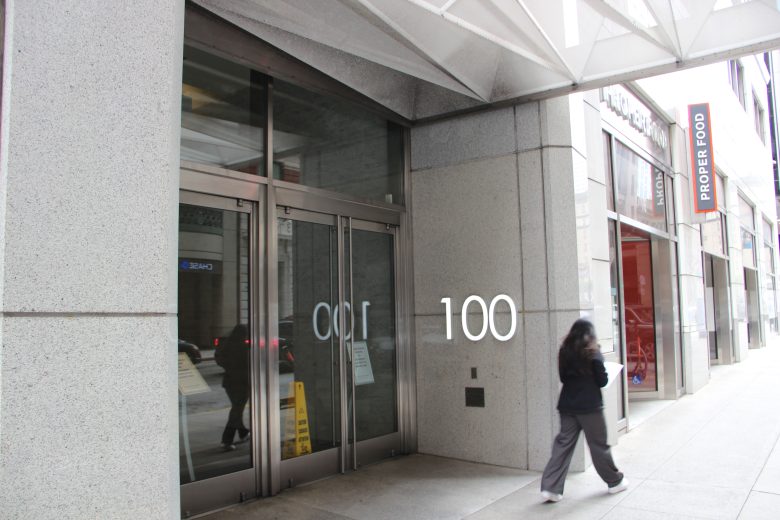
Most immigrants with hearings scheduled at San Francisco immigration court at 100 Montgomery Street on Monday and Tuesday did not appear. But Mission Local observed proceedings on both days and witnessed 15 cases of individuals and families who did attend their hearings. In none of the 15 cases did the DHS attorneys file motions to deport them to third countries. Instead, the judges set future hearing dates for their proceedings to continue.
One woman without an attorney who had arrived in court with her two children – a 5-year-old girl and a 7-year-old boy – said she was worried, but her children had no idea why they were there.
While waiting for the judge, a court observer gave the woman’s daughter a notebook and crayons, and she started drawing quietly. When the judge, Steven M. Kirchner, granted the woman a new hearing date in about three months, she was relieved.
“I was worried because it was the first time I came to court, but now I feel okay,” she told Mission Local in Spanish.

It’s still early to determine if these deportation orders have truly stopped or if this is a temporary pause. Dalia Blevins, an attorney at La Raza, said DHS didn’t publish any written order that rescinds the third country agreements, so everything could change back just with another email. “There’s no formal way to prevent pretermission motions from coming back,” she said.
Nationwide, pretermit motions had increased dramatically since November. DHS filed over 17,000 motions to pretermit in January 2026 alone, compared to just 60 motions filed in January 2025, according to data released by EOIR and analyzed by the Center for Gender and Refugee Studies at UC College of Law.
An ongoing lawsuit, U.T. v. Bondi, is challenging the legality of the underlying rule behind these third country agreements, arguing that most countries involved in the agreements cannot be considered safe and lack functioning asylum systems. It’s unclear if the lawsuit is related to the decision to stop filing motions to pretermit.
According to data from Mobile Pathways, of the 1,141 motions filed in San Francisco, 236 were granted, 171 were denied, 68 were withdrawn and 661 are pending.

There is no such thing as “deporting to a third country.” That’s not what “deportation” means. Sending someone to a different country, especially in connection with financial or diplomatic arrangements involving money or aid in exchange for humans?
That’s called trafficking.
Deportation to a “third country” is cruel and unusual punishment and therefore a violation of the U.S. Constitution.