

Michael Lai, a frontrunner in the District 11 supervisorial race, tells voters that he’s an “educator,” “a school builder” and a “community organizer.”
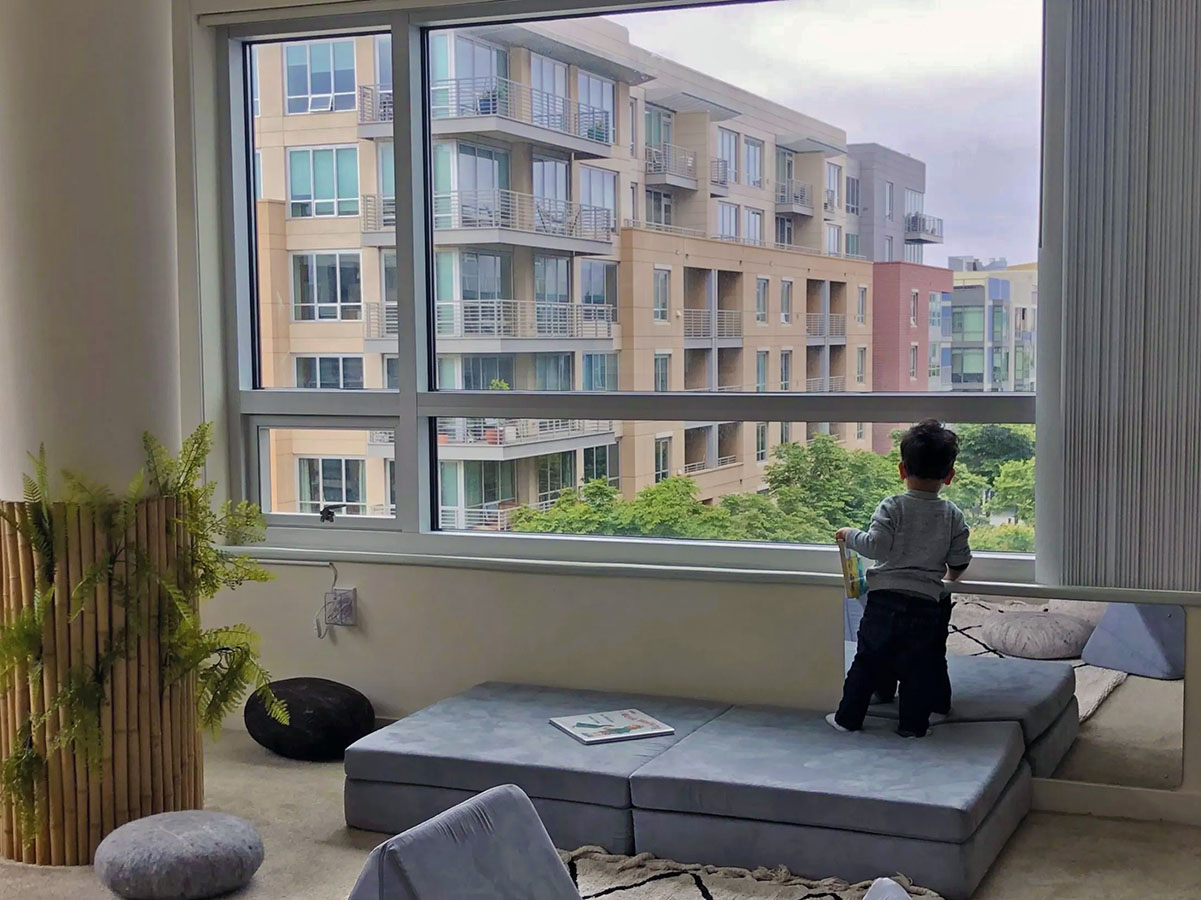
On the campaign trail and on his website, Lai promotes his experience as the founder of Tinycare, a network of at-home daycares established in 2019 that, he says, “provides housing for teachers” and has expanded to more than 30 locations across the Bay Area and Arizona. Per Lai’s campaign filings, in which he lists himself as CEO, the company is worth more than $1 million.
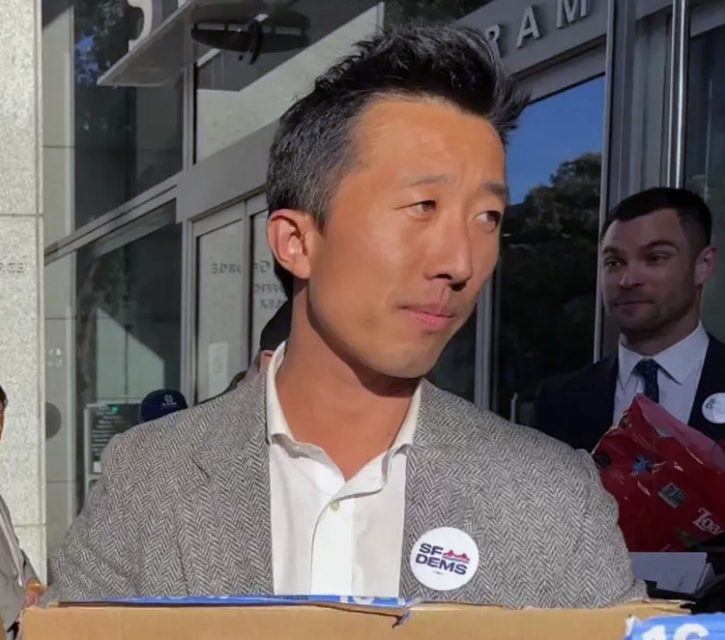
However, in February 2023, Lai sold Tinycare to another company, a large Montessori school network called Higher Ground Education. On Aug. 1 of this year, all employees were laid off with three weeks’ notice, losing both their homes and their jobs, according to a teacher and a mid-level manager.
By Aug. 31, 2024, all of the educators formerly employed by Tinycare had quit or been laid off, and what remained of the daycare’s San Francisco and Walnut Creek sites closed.
Looking back, one teacher reflected, they should have seen it coming.
High tuition, near-minimum wage salaries
Initially, Lai’s vision for a new daycare model attracted many teachers and families to Tinycare. It was unique: A network of micro daycare centers that would provide childcare in intimate, at-home settings. Teachers, who obtained licenses under their names, were hired to live and work from apartments leased by the company, in exchange for partially or fully subsidized rent.
Over time, though, that vision soured for many: Mission Local interviewed four parents and nine teachers formerly employed by the daycare network. While a couple of the teachers still defend the concept, most said they were underpaid, overworked, and struggled with chaotic conditions.
Six former teachers said that their wages and subsidized housing agreements with Tinycare were less attractive than they’d been led to believe: They had to contribute between $500 and $2,000 per month toward their rent, the teachers said. They were then paid between $17.75 and $19.81 an hour, only a few dollars more than San Francisco minimum wage at the time, but higher than the average going rate for daycare teachers in California.
Seven former teachers said that they received minimal support from Lai and his upper managers, whom they described as “unavailable.” All described working more hours than they’d been contracted for. And several described Lai as an ideas man unfamiliar with day-to-day aspects of childcare, since he had never been a full-time educator.
Four parents who had sent their children to Tinycare told Mission Local they loved its premise. They loved the idea of in-home daycare, and learning in small groups. They loved their teachers. They loved it so much that they were willing to pay as much as $4,387 a month per child at a site Lai later said was one of Tinycare’s “least profitable locations,” according to one family’s 2022 agreement.
According to Lai, the average tuition for a full-time child was around $3,300 a month. San Francisco’s Children’s Council estimates that a family would on average spend $1,732 a month per child for at-home childcare, around half of Tinycare’s rate.
Lai was first contacted for this story by Mission Local on Aug. 29. After being informed by text that the story was about Tinycare, Lai did not respond until midnight. When reached by phone on Aug. 30, Lai declined to be interviewed on the record, but directed Mission Local to Tinycare’s former head of education, Adam Nadeau, two former parents, and a former teacher who asked to remain anonymous. Lai later sent written answers to questions.
“Our lead teachers were W2 employees, with subsidized housing, health benefits, and stock options (the only childcare network in the country to do that),” he wrote. “Their total compensation was higher than a lead teacher at a childcare center, and they could live in San Francisco.” He added that teachers told him that the housing had changed their lives.
Nadeau said that Tinycare’s sites were operating at “very, very low margins” because the student-to-teacher ratios were so low; at most, six children to two teachers.
By law, privately funded childcare centers have a maximum ratio of four infants to one teacher or 12 preschoolers to one teacher.
A confusing model
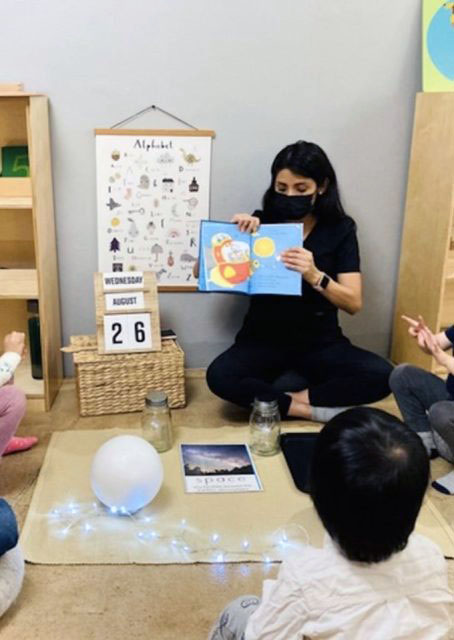
Some of Tinycare’s former teachers, meanwhile, said they found their contracts with Tinycare confusing, and struggled to take home a living wage.
Former teacher Nuria Santos said the overwhelming responsibilities at Tinycare, combined with a lack of clarity about her wages and rent, were too much for her. “Michael, you told me I was going to make $90K. You told me this is free housing … I was making $19 per hour,” Santos said, describing her thoughts at the time. She quit a year after being hired, as soon as the lease she co-signed was up.
Before she moved to San Francisco from Vallejo to work for Tinycare, former teacher Mahini Adams said that conversations with Lai and other Tinycare managers made her think that her housing would be completely subsidized. That pitch is what drew her, like many of the other teachers Mission Local interviewed, to the company.
In reality, these teachers said they typically contributed up to half of the rent for their spaces, subletting from or co-signing leases with Lai. Several said their share amounted to around $2,000 a month for a couple of bedrooms in the house where they operated a daycare. A review of two teachers’ contracts, and conversations with six others about their rents, showed variation in what the teachers earned and what they contributed to housing.
Nadeau said that wages were based on an “equity calculator” that took into account teachers’ experience. According to Nadeau, teachers had to pay rent only if they needed multiple bedrooms or had families. Otherwise, he said their housing contributions were taken into consideration when calculating an individual teacher’s hourly wage. The wages might seem lower than market rate, Nadeau said, because housing was provided by the company.
“We were upfront with how teacher’s compensation & housing subsidy worked, but it wasn’t the right model for every teacher. Do I wish early educators were paid even higher? Yes,” Lai wrote in his response to written questions.
After this story was published, Lai explained that Tinycare’s system of calculating teachers’ rent contribution into their initial compensation, rather than having the teachers pay for rent out of their wages, allowed them to pay lower taxes so their “total compensation was much higher than the market average.”
Even Nadeau acknowledged that the system was confusing. Much of his time was spent trying to figure out how to explain the “complicated” model to prospective teachers, he said. “In talking to teachers about this, I don’t think any of them would have ever said, ‘This is surprising because Tinycare was misleading us,’” he added. Nadeau said that teachers left the company in two or three cases because their incomes didn’t align with their “personal budgets.”

Former teachers who spoke to Mission Local disagreed.
Mahini Adams was paid $19.81 an hour, according to her 2020 contract — $3.74 above San Francisco’s minimum wage at the time.
After she was charged $500 for monthly rent, $200 for monthly parking, and a discounted Tinycare tuition for her son, “I only had, like, $60 to my name,” Adams said. “At that point, we were just, like, ‘This isn’t going to work.’”
Adams quit in September 2022, after being advised by her doctor that the stress of her job was bad for her pregnancy, she said.
Another teacher with 15 years of experience, who declined to be identified, said she was paid $17.75 an hour after being hired in 2021. She contributed $2,000 for rent, and said she often wondered if she had made the right decision to leave her $1,200 a month studio apartment and former job.
To supplement her Tinycare income, she said she worked weekends as a cosmetologist. But even this became untenable because of the amount of overtime Tinycare required.
The former teacher recalled that, one night, kept awake by anxiety over her job, she calculated how much Tinycare was making from her site. Then she added up all the work she did. The daycare could not operate without her, and the license was under her name. Still, contractually, Tinycare could ask her to move out with 72 hours’ notice.
She realized she was often distracted at work, wondering, “When are they going to tell me to leave?”
“That’s when I was, like, ‘Okay, it’s time to leave.”
Long hours, extra responsibilities
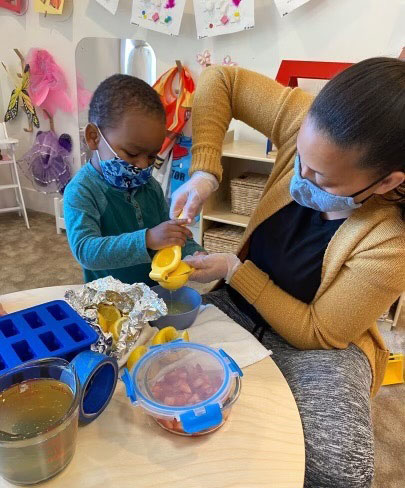
Money wasn’t the only issue for disillusioned former teachers. Some felt the operation lacked an ethos of care, despite what they described as Lai’s professed commitment to early childhood education.
Several felt that there had been poor communication from the beginning. Tinycare’s onboarding process, from confirming a start date to finding a site, was disorganized, they said.
Once they were hired, the former teachers all recalled working long hours. More responsibilities fell to them than expected: Budgeting, ordering supplies, cooking, cleaning. While they were paid time-and-a-half overtime, in at least one case a contract showed that overtime was capped at one hour per week. Other former teachers said they were advised by Tinycare management not to work overtime because the company could not pay them for the extra hours.
But there were still toys to be picked up, groceries to buy, and parents to communicate with outside of operating hours. Because the teachers’ licenses were under their names, they would have sole legal responsibility if something went wrong. Teachers couldn’t attend to operational tasks while the kids were asleep during naptime, as Nuria Santos said her managers advised, because they’d be held personally liable for not watching over the children.
“We really needed them,” another teacher said of upper management. “They were silent, and we had to figure it out on our own.”
“We absolutely responded to any teacher concerns and were constantly trying to improve,” Lai said in a written statement, adding that he cut his own “limited salary first” to keep all the teachers on payroll during the 2020 pandemic.
“I would argue that there wasn’t a lack of support, but there oftentimes was kind of a lack of support in the place that people wanted,” Nadeau said. Some teachers, he said, had a “very positive” experience, but others had “mismatched expectations,” despite management’s efforts to be “transparent” and “values-forward.” According to Nadeau, expectations included taking on additional responsibilities teachers wouldn’t normally have at a childcare center, like creating menus and attending to operational tasks during their regular hours.
A revolutionary vision, a youthful leader

Lai, now 32, was still in his 20s when he began to develop his vision for Tinycare.
After graduating from Harvard University in 2014 with a degree in government, Lai filled his resume with experience in education — educational startups, that is.
He worked at Minerva University, a college offering online instruction, and was an “entrepreneur in residence” at Promise Venture Studio, an accelerator for entrepreneurs in early childhood development.
In 2019, he founded Tinycare with the goal of helping to “solve the childcare crisis in America,” Lai said in a 2022 interview with ULU Ventures.
Shirley Chen, who had taught for 20 years, became one of Tinycare’s first two “founding teachers” in June 2019. When Lai offered her a job, Chen said, she couldn’t resist the opportunity to help create her own curriculum, provide an intimate childcare experience, and receive free housing.
So Chen obtained a license to operate a daycare out of a home for which she and Lai co-signed a lease. Families paid Tinycare tuition and Tinycare paid Chen. Her site in Mission Bay, which doubled as her home, served up to six children at a time, supervised by Chen and an assistant teacher, from around 8 a.m. to 6 p.m. New sites opened quickly under the same model.
But the experience didn’t turn out to be everything Chen had hoped: “The vision that I thought Tinycare had — I didn’t feel like that’s what was practiced.”
As Tinycare expanded, there was less support for individual teachers and less time for collaboration, multiple former teachers said. Chen remembered feeling frustrated that her input wasn’t taken seriously; that she was only hired to “look good on paper.”
Lai had “good ideas,” Chen added, but “didn’t have the experience that a lot of teachers had.” She quit in April 2021.
Other teachers hired after Chen expressed similar disappointment. On paper, they said, the Tinycare model seemed ideal, especially for women with their own children who were hired as teachers at the beginning of the pandemic. One former teacher who later accepted a management role at Tinycare praised Lai’s involvement.
But another former teacher described Lai as a “nice guy” who let day-to-day aspects of his business “fall through the cracks.” To Mahini Adams, Lai’s experience volunteering in a classroom did not mean he knew how to work with kids under five or understand the needs of teachers.
“[Lai says] he’s so passionate about teachers … and being able to pay them what they deserve,” Adams said. “But then, like, when the ‘ish hits the fan, per se, he backpedals on everything.”
After experiencing the reality, most of the former teachers Mission Local spoke with had quit within a year and a half. Nadeau estimated that most stayed a year and a quarter.
In his written statement, Lai said his focus was developing the business and hiring a team with “decades of early childhood classroom and management experience.” He said he personally had two years of experience volunteering in early childhood classrooms.
After sale, teachers left en masse

While there were always bumps along the road, Tinycare’s sale in February 2023 to the Montessori network Higher Ground was particularly rough, according to several parents and former teachers.
Lai announced his company’s acquisition on a staff Zoom call in early February of last year. The CEO was all smiles, according to one former teacher. The educators, meanwhile, were shocked. They began asking questions, two former teachers present said: How long had Lai known he was going to sell? Were they still going to have a place to live? A job?
When they received few satisfactory answers, they began expressing their concerns to the parents with whom they had worked closely.
With so much turnover in upper management, one former teacher added, they didn’t know who to turn to for help. Lai, she said, had become defensive instead of sympathetic during the call.
A few days later, on another Zoom call with more than a dozen families, Lai told parents about the impending sale, explaining that Tinycare’s business model had become challenging to sustain. Now, he said, he believed that integrating its at-home system with a larger school network was the future of childcare. Lai would stay on as an advisor.
In a recording reviewed by Mission Local, parents expressed concern that sites would be shut down and teachers evicted from their homes. “I feel like there’s a huge disconnect between what you’re telling us and what we’re hearing,” one parent said.
“That’s, like, pretty shocking to me, and we haven’t heard anything to that effect,” Lai responded, adding that the teachers’ pay would be the same with Higher Ground. While their contracts said teachers had 72 hours to move out, Lai said that this didn’t happen in practice.
“You didn’t involve them in this acquisition at all, and you’re surprised that they don’t want to join. I’m surprised that you’re surprised,” another parent said.
Lai directed their questions to the new owner, Higher Ground. Higher Ground did not respond to a request for comment for this story.
Things moved quickly after the sale was finalized. On Feb. 12, 2023, new offer letters were sent to teachers, to be signed within five days by those who wished to continue under new management. By Feb. 21, 2023, according to documents reviewed by Mission Local, the transition would be complete.
“I give a lot of credit just to the teachers running the program, because they were doing almost everything by themselves at that point,” a parent said. Lai “was out of the picture, and he didn’t really help make that transition go smoothly for parents.”
For his part, Lai said in a written statement that it was no longer his role to make operational decisions after the acquisition, but that he did what he could to help teachers who reached out to him.
Since she was hired in 2021, one former teacher said, there had always been a lot of staff leaving Tinycare, “like it was a revolving door.” But, “the week after the acquisition, people just left. They didn’t even say anything. They packed some of their stuff and left.”
Several said they opened their own at-home daycares. They were followed by loyal parents who opted not to remain with Higher Ground. Some of the Tinycare sites were taken over by other teachers, but most simply closed.
Another former teacher said she felt like she had no choice but to stay with the company: She couldn’t afford another place to live on her salary.
The end
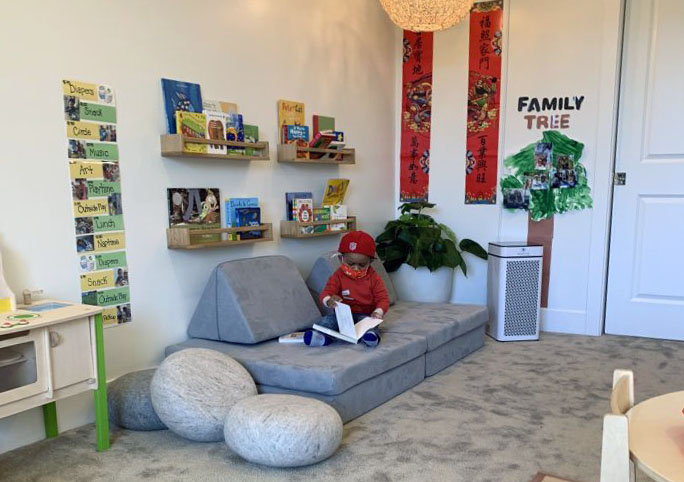
A few former teachers Mission Local interviewed chose to stay on for the daycare’s final year of operation. They had positive experiences with Tinycare, two said, and wanted to keep their housing.
But overall, things started to go further downhill after the acquisition.
The teachers’ monthly budget was cut, according to one former teacher. It now seemed there was no one to ask for support, said Joanna, another former teacher. In a year and a half, she had taken just three days off; under Higher Ground Education, the teachers no longer received federal holidays off.
Joanna was the only former Tinycare teacher Mission Local spoke with who hadn’t co-signed her lease; only Lai’s name was on it. In May 2024, she received a notice that her rent hadn’t been paid. She refused to cover the cost — around $4,000 a month for a one-bedroom apartment. Joanna said she was still unsure who had previously paid her rent, Lai or Higher Ground Education, or if it had been paid at all. Joanna said she now plans to open an at-home daycare in the building next door.
On Aug. 1, 2024, all remaining former Tinycare employees were laid off. Parents received an email telling them that all the daycare sites would be shut down by Aug. 23. With the sites closed, teachers had neither jobs nor homes, and families were left scrambling for last-minute care.
Lai, meanwhile, has been focused on running for supervisor.
In a blog published in February 2023, Lai said that managing Tinycare wasn’t always smooth sailing: “Having previously worked only in a tech startup-culture, I struggled to manage teachers with high rates of trauma and mental-health challenges,” he wrote.
But, he added, “Being a teacher means caring immensely about relationships with the specific children & families you are serving.”
Two parents who’d enrolled children at Tinycare said Lai could have exercised more of that care toward his employees.
“My sense from hearing from Michael and reading about his story is that he thought daycare was going to be an industry he could ‘disrupt’ and turn around a company,” said Bud Caddell, whose child’s site was closed after the acquisition.
“But I think he was forgetting that it was a company run by human beings, who you have to take care of, and who require communication.”
Additional reporting by Xueer Lu.
An earlier version of this story identified Minerva University as a for-profit institution. It is a non-profit, and is affiliated with a for-profit company called the Minerva Project. This piece was also updated to reflect new information about teachers’ pay structure and tuition costs.
I joined Tinycare as a lead teacher in 2021, and as I read through this article, I’m deeply disappointed. I still wholeheartedly believe in Michael’s vision for Tinycare, which provided quality care for children and much-needed housing for early educators, benefiting so many, including myself. While there were challenges, as with any startup, especially during COVID, I remain extremely grateful for Tinycare and Michael’s dedication.
Michael was a hands-on CEO who genuinely supported Tinycare teachers. Several items about teacher compensation are not correct and tuition at most sites was on average $1K lower than it indicated.
After Tinycare was acquired by Guidepost Montessori in February 2023, Michael stepped back from daily operations, and the company came under new management. The acquisition introduced significant difficulties, and I’m disappointed in how Guidepost handled these issues, especially the closures in August 2024. Michael found out about these closures the same day as the teachers, and it’s important to distinguish his vision and efforts with Tinycare from the later challenges that arose under new management.
I stay in touch with many former Tinycare families who continue to praise the program’s impact on their lives. This article fails to acknowledge the positive contributions Tinycare made to families and teachers.
While the acquisition by Guidepost Montessori did bring challenges, it’s crucial to recognize that Michael Lai and Tinycare stand apart from the unfortunate events that followed.
I was a (very small) investor in TinyCare and watched Michael pour his heart and soul into achieving his mission and vision (and it *really* was mission, not money, driven). I’ve invested in and advised 20+ startups, and Michael is in the top % of earnest, well-meaning, people-centered founders I’ve witnessed.
I’m sure some things weren’t perfect and that Michael regrets some expectations he set or conversations he had, but that’s a referendum on how chaotic/challenging startups are and how difficult providing childcare during COVID was, and not Michael’s intention or ability.
He sold Tinycare in February 2023 and new ownership decides to layoff people in August 2024.
It’s like selling my car and then the new owner of that car hits someone. How is that relevant?
What a lame hit piece.
According to the article though it’s like this isn’t just some random crash. The car was falling apart long before it was sold. The new owner might have been the one to crash it, but the neglect, lack of maintenance, and failure to take care of things properly set this disaster in motion. Trying to wash your hands of it now is laughable. If you don’t take care of what’s yours, it’s going to break down, and that’s exactly what happened here.
My experience was very different from the teachers interviewed for this piece. I worked closely with Michael and some of the teachers mentioned. Not everyone employed connected with the innovative vision of Tinycare. I look at my time at Tinycare very fondly. Serving as the First Founding Head Teacher of Tinycare since February 2019 was a remarkable honor, especially collaborating with Michael Lai, whose vision led to the opening of our first micro-center that April. Teaching a small group of toddlers in San Francisco was a transformative experience, enhanced by the innovative childcare model we were creating together. Michael’s genuine passion for high-quality childcare and his commitment to valuing teachers and parents made a lasting impact on me. His kindness and authenticity shone through in every interaction, especially exemplified when he stepped in as my assistant teacher during busy moments.
Michael’s dedication extended beyond our immediate work; he fostered an environment where teachers felt supported and empowered. His genuine interest in our well-being and dreams was inspiring, making weekly check-ins feel personal and impactful. Despite some challenges as Tinycare grew, my time there was incredibly meaningful, thanks largely to Michael’s guidance. He not only illuminated the societal importance of early childhood education but also introduced me to the concept of Ikigai, helping me align my passions with purpose. I remain grateful for Michael’s influence, as he continues to be a force for good, shaping a better world through his work.
Thank you Mission Local and Abigail Van Neely for this thorough and well researched journalism. Transparency and accountability are essential…….now more than ever.
I just want to say after reading the article that while Tinycare may not have been perfect, first attempts rarely are. I think Mr. Lai at least deserves credit for TRYING something new. As we know, the def of insanity is doing the same thing over and over and expecting different results, isn’t that what we’re doing with daycare? At least he TRIED new concept, which seems to be more than his detractors in the comments have done. Okay, this attempt failed. But it wasn’t out of malice or greed, rather the unanticipated challenges ANY new enterprise faces. The model seems to be attractive,maybe someone else can take the idea and build a better mousetrap…or, er, at least a better crib
One of the many changes absolutely required in child care is the end to the use of the term “day care”…which implies that the child is a package you store at the “daycare” and pick up after work. I sounds like low-paid people with little interest in your child will be there to see to him/her/them. And it sometimes gets a little like that. As a person with experience who has written many things to try and raise this standard for the sake of the humanity of the caregiver and the development of the child, I urge Mission Local to use the term “child care”. Everybody else, too.
Almost $4,400 a month?
Education privatizers, charterizers, and “entrepreneurs” only care about monetizing everything and are happy to squeeze top cash out of the overwealthy. An inexperienced greedmonger like Lai sees dollar signs where a competent person would see the need for substantial subsidies to provide meaningful childcare and educational opportunities for all families.
Lai’s failed project of techbro starting up a childcare corporation was naïve and arrogant. Nurturing children, valuing teachers and supporting families won’t work if your only goal is lining your pockets and dreaming of a unicorn babysitting machine network. He has proven himself to be disinterested in the “product” he was hawking. That should have been clear at the outset: he didn’t know anything about childcare when he set out to make money and after he failed all he knows is childcare is hard.
San Francisco’s November ballot is full of entrepreneurial slick talking private industry self-described “experts” who want to “fix” (actually, take over) a vast range of public goods and services and apply “can-do know-how” to bring “results” and “efficiencies” to every aspect of personal, social and political life. Lai and Mahmood, for example. Vague empty promises with no demonstrated ability or even clear proposals are worthless, just like those pretend public servants.
It is surprising how many candidates running in this November’s district supervisor race are presenting themselves as something they are not, such as a neuroscientist. As someone who holds a valid teaching credential and put decades into public education, it is offensive to see other candidates presenting as “grassroots” and using the word “teacher” to gain trust. Let that be a clear message warning to voters: People who lie, embellish or falsely represent themselves are terrible choices for representing their constituents. Thank you for this extremely important article.
Thank you for this excellent piece. This is so typical of problems created when people treat education and social services as if they were for-profit businesses. Also really telling that he felt confident in managing experience Early Childhood educators given he has no experience in early childhood other than a bit of volunteer work.
Also telling is how he ultimately blames the teachers for his business’s failure instead of seeing his own failures and taking responsibility:
“Having previously worked only in a tech startup culture, I struggled to manage teachers with high rates of trauma and mental health challenges,” he wrote.
What are these Ivy League institutions teaching people these days? Certainly not ethics and social responsibility. SMH
This is wild, and not in a good way. I hope that these workers will file wage claims against Lai, TinyCare, and Higher Ground with the California Labor Commissioner ASAP.
Abigail Van Neely, this is a most instructive article. But first may I say that people who respect the children in childcare call it childcare, and not daycare, as if we took care of days.
How is it that Mr. Lai has not be arrested for scamming the childcare workers, the parents, and the children in this matter? He set up something and then caused its disruption. How is it not culpable??? There are perfectly good ways for people to care for children in their homes, and there is supervision for such people. Are our children like bags of sugar, to be left somewhere for someone to “look after” and return at day’s end? Or is this serious work, making a difference in lives of people, and shouldn’t this all be taken most seriously? I worked with young children in public schools and in programs I started for most of my working life, and have written about it, most recently in a book available in the SFPL, called -The Sun’s Not Broken, A Cloud’s Just in the Way: On Child-Centered Teaching – this was a scam and Mr. Li should be punished for perpetrating it on innocent teachers, parents, and children.
The Harvard Kennedy School of Government has done so much damage.
The scammy-ness makes sense. Lai is connected to the billionaire weirdo Network State cult and a founder of the rightwing real-estate speculation “non-profit,” Neighborhood SF.
Great journalism here. kudos to Mission Local, Van Neely, Lu, and editors.
Please translate this article in Chinese!!! Thank you so much for this article – his “bold” ideas ruin peoples lives
And it’s really shameful that billianaire backed and Astroturf candidates like Michael Lai, Bilal Mahmood, Trevor Chandler, Scotty Jacobs and Autumn Looijen stoop to lying about their democratically elected opponents and their records. Michael Lai treated these teachers, their kids and the parents and families like dirt. Let’s hope he loses by a landslide and is forced back to the private market where he belongs.
Thank you Mission Local for this fantastic reporting! I am absolutely disgusted and feel awful for what those dedicated teachers and families went through. Michael LIE is a complete and utter fraud. I heard him at a debate and he oozes with insincerity and most certainly sounds like an “ideas man” – as one teacher described him – who is campaigning but will neglect his constituents just as he did the teachers and families of TinyCare. One of his talking points is that we need “new leadership” to make District 11 better but a new leader with the same mindset that is destroying politics is counterproductive to positive change. We want bold, engaged leadership motivated by shared community values and integrity. Not this sham artist.
I missing something? Masks on the kids why?
They’re old photos- some taken by a person who left in 2022- so yes you appear to be missing something.
Heaven save us all from free market capitalist candidates like Michael Lai, Trevor Chandler, Bilal Mahmood, Scotty Jacobs and Autumn Looijen. Let them remain in the private sector as private business people, brand managers and lobbyists for venture capitalism.
I’m sure it was challenging for Michael to manage teachers with trauma having come from a tech- background. Just like I’m sure those same teachers struggled watching him drive the business to failure while having come from successful childcare centers like Bright Horizons. Michael should be ashamed; not only for failing the business but also for all those who relied on it.